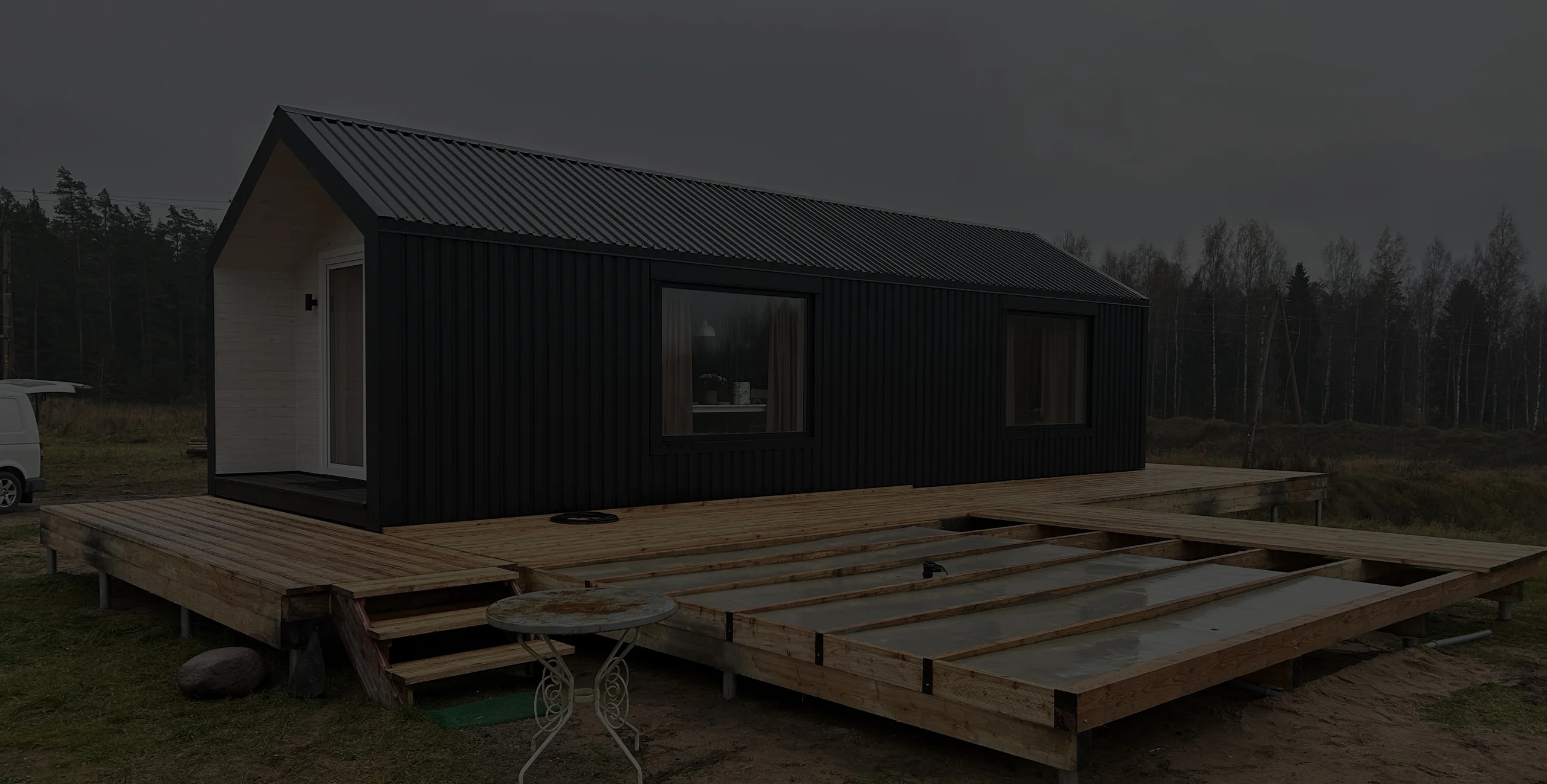
Can screw pile foundations be installed in complex soil?
Plots of land with a steep slope, high groundwater level, or a thick layer of soft soil significantly complicate foundation construction. Building concrete foundations in such conditions requires extensive earthworks, groundwater pumping, and the use of heavy machinery. Screw piles allow for the creation of a load-bearing base for the building’s frame, physically bypassing the weak soil layers and avoiding unnecessary earth moving.
Thick layer of soft soil
In areas where the topsoil consists of thick peat or mud, the ground cannot support the weight of the building. The goal is to reach the dense sand or clay layer deep underground. Instead of digging a foundation pit several meters deep and replacing the soil, screw piles with extensions are used.
- During installation, the first support is screwed into the ground.
- The next metal section is attached to it.
- This process is repeated until the screw pile blade hits the solid layer.
- The weight of the building is transferred to the dense soil, preventing the building from settling even if the end point of the support is at a depth of 4 or 6 meters.
Sites with elevation differences and on slopes
When building in hilly or sloped terrain, leveling the ground and concreting retaining walls require large financial investments. Screw piles allow you to preserve the existing natural terrain.
- The supports are screwed into the ground at the existing slope.
- The above-ground part is sawn off at one precise horizontal level.
- At the highest point of the building, the screw pile can be 20 centimeters above the ground, while at the lowest point of the slope it can rise to a height of several meters.
- To seat the frame beams accurately, adjustable U-shaped or flat brackets are used for the final millimeter corrections.
Structures near water and on unstable shores
In places with high groundwater or in the direct vicinity of a water body, excavation work is difficult due to constant moisture.
- Screw piles are installed directly in water or quicksand.
- Hot-dip galvanized supports are used for such projects, often 3000 millimeters in length, to reach stable soil under the mud.
- The zinc coating protects the metal from corrosion while staying in constant contact with water.
- The length of the supports allows the building frame or terrace to be raised to the required height, protecting it from spring floods.
Installation in conditions of limited access
Complex soil often means that heavy machinery cannot physically enter the site. Tractors will get stuck, damage the lawn, or be unable to maneuver between trees.
- In such situations, installation is carried out using a professional electric hand-held reducer.
- The equipment is compact enough for two installers to embed the supports in a dense forest, courtyards, or very narrow spaces.
- The equipment generates high torque without vibrations that could affect adjacent structures.