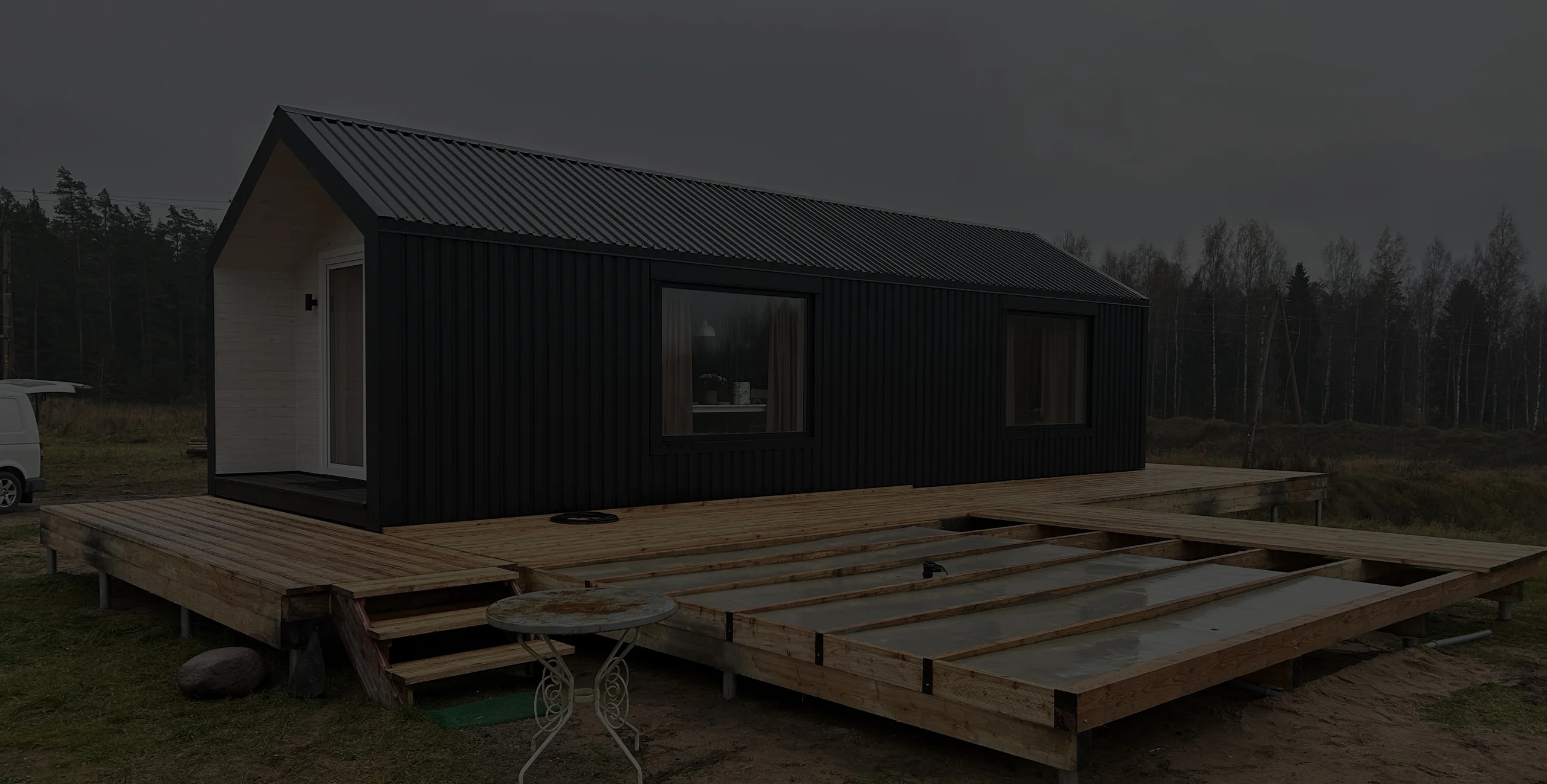
How many screw piles are needed for a house or terrace?
Before building a frame house, modular structure, or terrace, one practical question comes up. How many screw piles will be needed and how to calculate the number. We do not guess and do not work from assumptions. Engineers calculate the exact number for each project individually.
What affects the number of screw piles?
To determine the number and layout of piles, we evaluate three main factors:
• the total weight of the building combined with snow load determines the number of piles and shaft diameter
• soil bearing capacity dictates the spacing between piles. In soft soil, piles are installed closer together or longer models are chosen to reach the load-bearing layer
• the thickness of the bottom frame beams sets the maximum spacing between piles, so the floor does not sag
Differences between house and terrace foundations
Different structures have different requirements:
• terraces and canopies need 76 or 89 mm diameter piles, spaced further apart
• modular and residential houses use 89 or 108 mm piles, placed under corners and load-bearing walls
What makes up the screw pile foundation price
Screw pile foundation price consists of three main parts:
• pile length, shaft diameter, and metal wall thickness
• transport of materials and equipment to the site
• installation with professional equipment, ensuring correct angle and depth
When looking for cheaper screw piles, some check building material warehouses or specialised stores. Screw pile foundations are not the place to save. Cheaper metal without proper anti-corrosion coating will deteriorate within a few years. Screw pile prices reflect the metal volume and engineering execution.
How to find out the approximate quantity for your project
You can see the approximate number of screw piles and price using the LP Projekti calculator. By entering the project dimensions and structure type, it shows the estimated pile count and cost range. It is a good starting point for planning before the engineering calculation.
The exact number and final price are determined after reviewing the drawings and assessing soil conditions. The difference between the estimated and actual count is usually within 5 to 15 percent depending on project complexity.