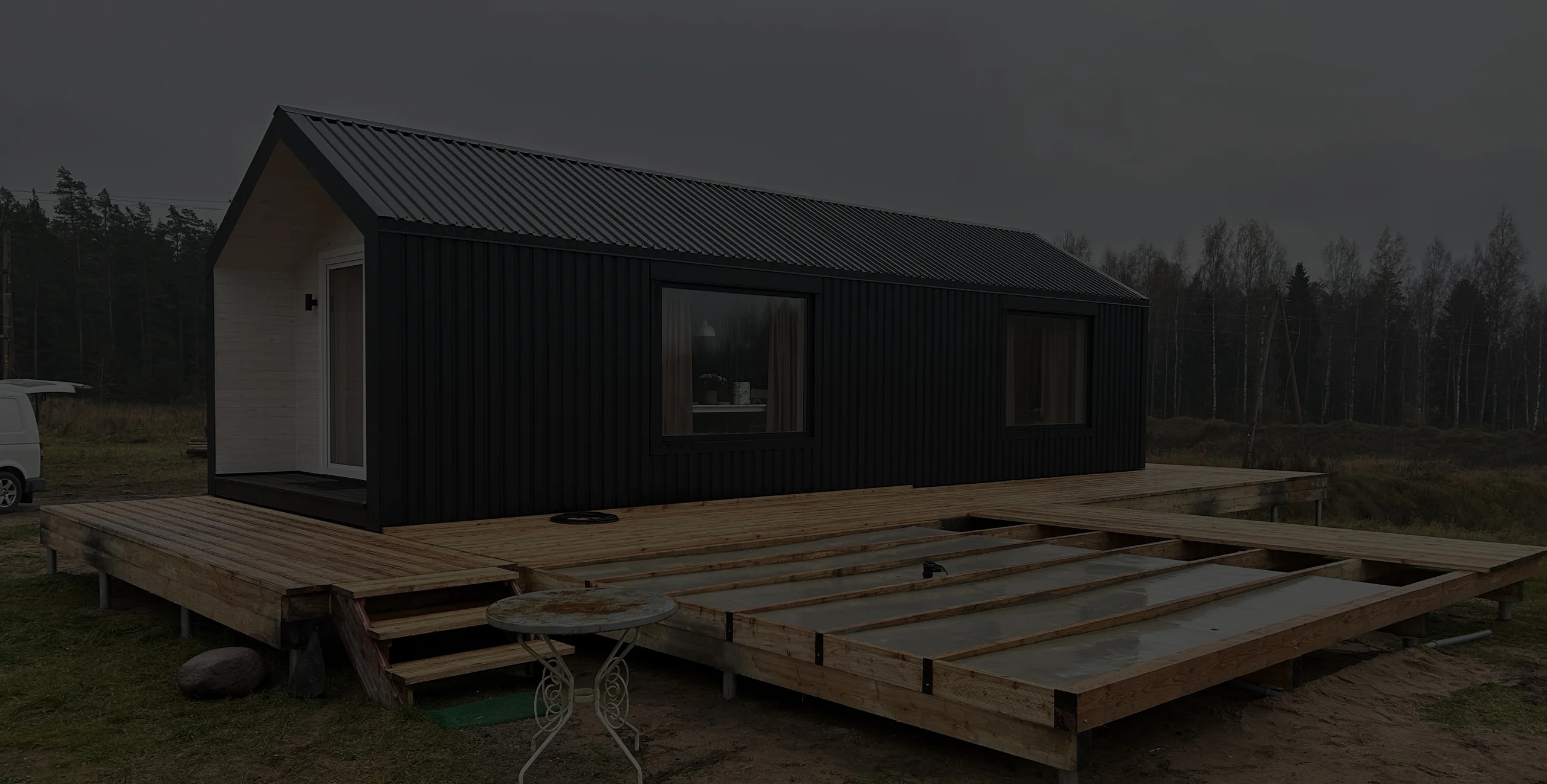
Screw piles or concrete foundations – which is more suitable for your project?
The construction of foundations is one of the most important stages of building. The chosen solution determines the stability of the structure, costs, duration of the work, and future maintenance options. In the case of private houses, terraces, sauna buildings, and lightweight structures, screw piles are increasingly used as an alternative to traditional concrete foundations.
In this article, we look at the main differences between the two solutions and the situations in which each is more suitable.
Concrete foundations – the traditional solution
Concrete foundations have been used in construction for decades and are suitable for various types of structures, especially large and heavy buildings.
However, their construction typically involves several labour-intensive stages:
- earthworks and removal of soil
- installation of formwork
- reinforcement
- concreting
- curing time
These processes increase both the duration of the work and the costs. In addition, once constructed, the foundations can hardly be dismantled or relocated.
Screw piles – a modern alternative
Screw piles are metal supports with a helical blade that are screwed into the ground down to a load-bearing layer. They provide a stable foundation without concrete and without long waiting times.
Key advantages:
- fast installation (often within one day)
- no extensive earthworks required
- minimal disturbance to the site
- ready to bear load immediately
- ability to dismantle or adjust the structure
These characteristics make screw piles particularly suitable for lightweight structures.
When to choose screw piles?
Screw piles are best suited for:
- terraces and extensions
- timber frame houses
- modular buildings
- sauna buildings
- sheds and shelters
- pergolas
- boardwalks and structures near water
- projects on challenging terrain
They are also an ideal solution in places where access for heavy machinery is not possible.
When is it better to choose concrete?
Concrete foundations may be more suitable for:
- large masonry buildings
- multi-storey structures
- projects with very heavy loads
- particularly specific soil conditions
The correct choice of foundation always depends on the project requirements and loads.
Costs and speed of work
Although the exact costs vary for each project, screw piles often allow the overall budget to be reduced because:
- no extensive earthworks are required
- no concrete costs
- no waiting time
- faster installation
As a result, the construction process can begin sooner.
Conclusion
Gan betona pamati, gan skrūvpāļi ir kvalitatīvi risinājumi, ja tie tiek izvēlēti atbilstoši projektam. Vieglām un vidēja izmēra konstrukcijām skrūvpāļi bieži nodrošina efektīvāku, ātrāku un elastīgāku rezultātu.
Ja rodas jautājumi par piemērotāko pamatu veidu jūsu objektam, ieteicams konsultēties ar speciālistu, kurš izvērtēs slodzes, grunts apstākļus un konstrukcijas prasības.
Nepieciešama konsultācija par pamatiem?
Aizpildiet kontaktformu, un mēs palīdzēsim izvēlēties piemērotāko risinājumu jūsu projektam.