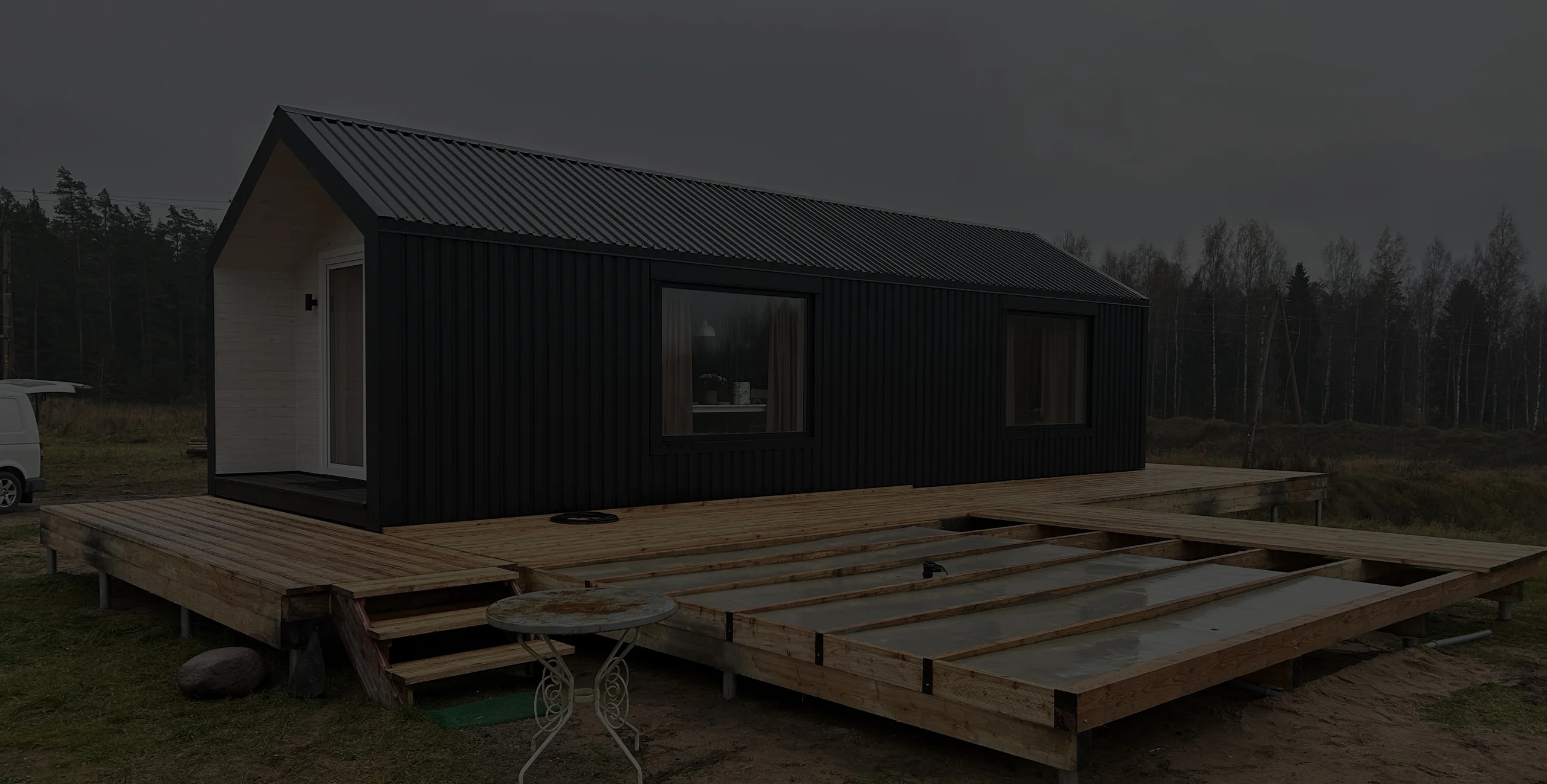
Screw piles or concrete foundations. Which is right for your project?
Foundation construction is one of the most important stages of building. The chosen solution affects structural stability, costs, project duration, and future maintenance. For private houses, terraces, saunas, and lightweight structures, screw piles are increasingly used as an alternative to traditional concrete foundations.
This article looks at the main differences between the two solutions and the situations where each one is more suitable.
Concrete foundations. The traditional solution
Concrete foundations have been used in construction for decades and are suitable for various types of structures, especially large and heavy buildings.
However, their construction usually involves several labour-intensive stages:
- excavation and soil removal
- formwork installation
- reinforcement
- pouring concrete
- curing time
These processes increase project duration and costs. In addition, once built, concrete foundations cannot practically be removed or relocated.
Screw piles. A modern alternative
Screw piles are steel shafts with a helical blade that are screwed into the ground until they reach a load-bearing layer. They provide a stable foundation without concrete and without lengthy waiting time.
Main advantages:
- fast installation (often within one day)
- no extensive excavation required
- minimal damage to the surrounding area
- ready for load immediately
- option to remove or adjust the structure
These properties make screw piles suitable for lightweight structures.
When to choose screw piles?
Screw piles are best suited for:
- terraces and extensions
- frame houses
- modular buildings
- saunas
- canopies
- pergolas
- jetties and waterfront structures
- projects with complex terrain
Screw piles also work well in areas where heavy machinery cannot access.
When concrete is the better choice?
Concrete foundations may be more suitable for:
- large masonry buildings
- multi-storey structures
- projects with very heavy loads
- particularly specific soil situations
Cost and speed
Although exact costs vary for each project, screw piles often help reduce the overall project budget because:
- no extensive excavation is needed
- no concrete costs
- no waiting time
- installation is faster
As a result, construction can begin sooner.
Conclusion
Both concrete foundations and screw piles are quality solutions when chosen according to the project. For lightweight and mid-sized structures, screw piles often provide a more efficient, faster, and more flexible result.
If you have questions about the most suitable foundation type for your project, it is recommended to consult a specialist who will assess loads, soil conditions, and structural requirements.
Need a consultation about foundations? Fill out the contact form, and we will help you choose the most suitable solution for your project.